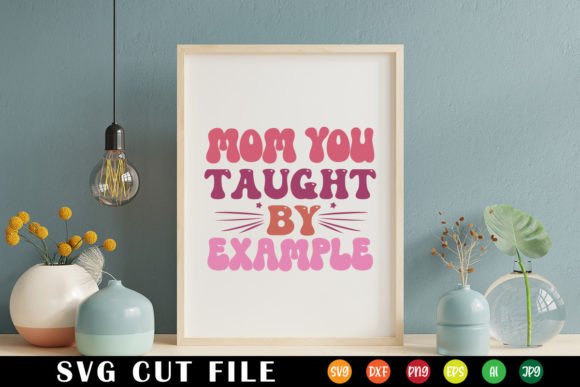
Mom You Taught by Example Retro Svg Review
As a designer who spends more time behind an embroidery machine than a computer screen, I approach every new digital asset with a healthy dose of skepticism. When evaluating the Mom You Taught by Example Retro Svg, my first thought isn't about how pretty it looks on a monitor, but how it will behave under the needle. This design falls squarely into the intersection of Crafts and Graphics, serving as a bridge between digital artistry and tangible, stitched goods. For those of us running small businesses or creating meaningful family heirlooms, understanding the practical translation from screen to fabric is everything.
First Impressions: Nostalgia Meets Stitch Logic
The retro aesthetic is currently dominating the handmade market, and this design captures that specific mid-century warmth without feeling like a costume. Visually, the layout suggests a balanced composition that respects the negative space—a crucial factor for embroidery. When I look at the word-by-layer structure included in the download, I see immediate potential for customization. Unlike flattened raster images, having separate layers allows me to manipulate individual elements. If I am designing a custom apparel piece where the client wants to change "Mom" to "Grandma" or adjust the color palette to match a specific brand identity, this file structure supports that workflow efficiently.
The mood is undeniably sentimental, yet the graphic style remains clean. From a digitizing perspective, clean lines in a vector file usually translate to better stitch definition. Retro typography often relies on bold shapes rather than intricate filigree, which is excellent news for stitch density management. It implies that the final embroidered patch or sweatshirt embroidery will have a substantial, professional hand-feel without becoming bulletproof or distorting the garment.
Real-World Application: The Custom Sweatshirt Test
To truly evaluate this machine embroidery design, I mentally placed it in a real production scenario. Let’s say I am fulfilling an order for a Mother’s Day boutique collection featuring heavyweight French terry sweatshirts. This is where the Mom You Taught by Example Retro Svg needs to perform beyond aesthetics.
In this scenario, I would utilize the SVG file to create a custom embroidery file tailored for fleece. The retro vibe pairs perfectly with the casual texture of sweatshirt material. Because the design likely features solid shapes typical of retro graphics, I would plan for a fill stitch foundation with satin stitch borders to define the lettering. The word-by-layer capability becomes invaluable here; I can assign different thread colors to each layer without fighting against a merged image. This separation ensures that when the machine switches colors, the registration remains crisp.
For an Etsy seller, this versatility is key. You aren't just selling a shirt; you are selling a feeling. Using the included PNG file, I could quickly generate a printable mockup for my listing photos before stitching a single sample. This saves time and materials while allowing customers to visualize the finished product. However, the true value lies in the physical execution. On a sweatshirt, this design serves as a focal point that drives buyer engagement because it feels personal and professionally executed, not like a generic heat transfer.
Navigating Fabric Challenges and Hoop Limitations
While the design is versatile, experienced makers know that context dictates success. There are specific environments where I would advise caution when using this digital embroidery file.
- Stretchy Knits and Ribbing: Retro designs often have geometric precision. If you are stitching on highly elastic ribbed cuffs or thin jersey, the tension required for satin stitches can cause tunneling. Always use appropriate stabilizer, such as cut-away mesh, to maintain the integrity of the graphic.
- Small Hoop Sizes: Before committing to a 4x4 hoop, verify the dimensions. Retro lettering loses its charm if reduced below a legible threshold. Tiny text turns into unreadable lumps of thread. If your hoop size is limited, consider resizing the design or selecting only specific words from the layered files to create a minimalist variation.
- Textured Fabrics: While this design works beautifully on tote bags and canvas aprons, be wary of high-pile fabrics like terry cloth towels. The detail in retro typography can get lost in the nap. In these cases, you may need to add a knockdown stitch layer beneath the design to flatten the fabric texture, ensuring the embroidery stands out clearly.
- Curved Surfaces: If adapting this for cap embroidery, remember that flat vectors distort when wrapped around a curved brim. You may need to arc the text manually in your digitizing software to prevent the letters from looking skewed once stitched.
Elevating Product Value Through Technical Precision
The difference between a hobbyist project and a commercial embroidery product often lies in the finishing. The Mom You Taught by Example Retro Svg provides the raw materials for high-value goods, but the maker must supply the technical expertise. Visual appeal directly correlates to customer trust. When a buyer sees clean edges, proper thread tension, and thoughtful color contrast, they perceive higher value.
Because this is a digital download, the consistency of your output depends entirely on your preparation. For personalized gifts, such as baby embroidery on a nursery pillow, the softness of the stitch-out matters as much as the look. Utilizing the AI file allows for precise adjustments to stitch types before digitizing. You might choose a running stitch outline for a softer feel on baby items, whereas a satin stitch border would be more appropriate for a structured tote bag design. This level of intentionality signals to customers that they are purchasing a quality handmade product, not mass-produced merchandise.
Essential Designer Notes for Safe Execution
Before you load this design into your machine or list it in your shop, run through this practical checklist. These steps protect both your materials and your business reputation.
- Verify Licensing: The product description confirms this is a digital download including AI, SVG, and PNG files. However, always double-check the specific license terms regarding commercial use. Confirm whether you can sell finished physical products, digital embroidery files, or both. Never assume rights that aren't explicitly granted.
- Test Stitch on Scrap: Never stitch a final project without a test run. Use a scrap of the exact fabric and stabilizer combination you intend to use. Check for puckering, thread breaks, and registration issues.
- Check Thread Contrast: Retro designs rely on color blocking. Test your thread colors against both light and dark fabric backgrounds. A color that pops on white cotton might disappear on navy fleece. Adjust your palette based on the actual substrate.
- Inspect Small Details: Zoom in on the vector nodes. Ensure there are no overlapping paths that could cause excessive stitch density in one spot. Clean up any stray anchor points in the AI or SVG file before digitizing to prevent machine errors.
- Mockup Validation: Use the provided PNG for digital previews, but ensure it accurately represents the stitch texture. Customers should not be surprised by the difference between a smooth vector graphic and the textured reality of thread.
Final Thoughts for Makers and Sellers
The Mom You Taught by Example Retro Svg is a robust asset for creative entrepreneurs. Its strength lies in its layered flexibility and timeless aesthetic, making it suitable for everything from holiday embroidery projects to everyday craft business staples. By treating this graphic as a blueprint rather than a finished solution, and by applying sound embroidery principles regarding stabilizer, fabric choice, and stitch density, you can transform a simple digital file into a cherished, high-quality finished product. Whether you are building a boutique brand or crafting a singular personalized gift, success comes from respecting the relationship between the digital design and the physical stitch.