Mom Thank You for Being You: An Embroidery Review
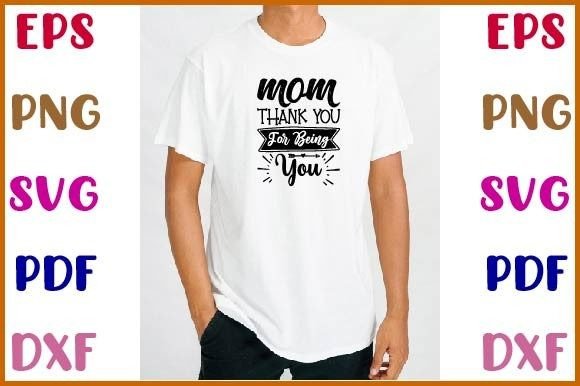
When evaluating a new digital asset for my studio, I look beyond the screen preview to imagine how the design will actually behave under the needle. The Mom Thank You for Being You graphic initially presents itself as a versatile vector file, listed with AI, SVG, EPS, DXF, JPEG, and PNG formats. While the product description highlights its readiness for electronic cutting machines, my focus as an embroidery digitizer and product reviewer is strictly on its translation into thread. For crafters, Etsy sellers, and apparel decorators, understanding the bridge between a flat graphic and a textured, stitched reality is where project success lies. This review breaks down the practical application of this sentiment-based design for real-world embroidery projects.
Translating Vector Sentiment to Stitched Texture
My first impression of Mom Thank You for Being You is that it carries a warm, appreciative mood essential for Mother’s Day markets or personalized gifting. However, because the source files are primarily vector graphics intended for cutting, they lack inherent stitch data. This means the design serves as a template rather than a ready-to-stitch machine embroidery design. For small business owners and makers, this distinction is critical. You are not buying a pre-digitized embroidery file; you are acquiring high-quality design assets that require professional digitizing or auto-digitizing software to become viable for commercial embroidery.
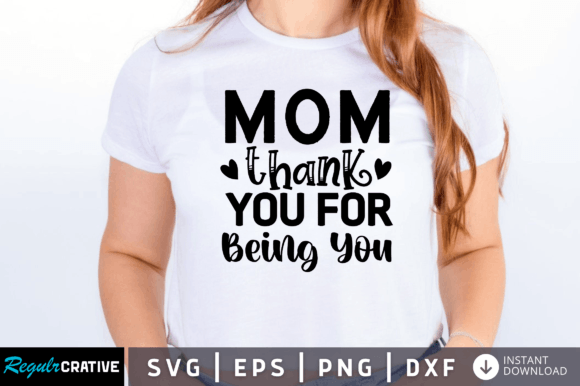
The layout appears balanced for center-chest placement on custom apparel or as a focal point on a tote bag design. The typography likely features a mix of script and block letters, which is visually appealing but technically demanding. In a real-life scenario, such as preparing a custom embroidered sweatshirt for a boutique client, the curvature of the script must be managed carefully. If the original vector has tight kerning or thin serifs, these areas risk becoming illegible once converted to satin stitch or running stitch. As a designer, I appreciate the clean lines of this graphic, but I immediately begin mentally adjusting spacing to accommodate thread thickness and fabric texture.
Real-World Application: The Custom Sweatshirt Test
To truly judge the viability of Mom Thank You for Being You, I envision a specific case study: creating a premium fleece sweatshirt for a handmade shop. Fleece is a high-pile fabric that can swallow fine details. If I were using this design for such a project, I would need to modify the digitization strategy significantly compared to a smooth cotton tee.
For this sweatshirt embroidery application, the text cannot simply be outlined. It requires adequate column width in the satin stitch to prevent sinking into the fleece nap. I would also consider adding a knockdown stitch layer beneath the design to flatten the fabric pile before stitching the main elements. Without this adaptation, even the most beautiful vector art will look messy and unprofessional on textured garments. Conversely, if applying this design to a baby embroidery project on lightweight cotton interlock, the concern shifts from sinking to puckering. Here, the stitch density must be reduced, and a lightweight cutaway stabilizer becomes mandatory to maintain the garment's drape. This duality highlights why checking your specific embroidery file parameters against your target substrate is non-negotiable.
Navigating Fabric Limitations and Hoop Constraints
While the sentiment is universally loved, the physical execution of Mom Thank You for Being You requires caution in specific contexts. Small hoop sizes present the first major hurdle. If the full phrase exceeds 4x4 inches, users with smaller machines must either resize (risking stitch integrity) or split the design. Resizing a complex script by more than 20% often distorts letter proportions and alters stitch angles, leading to poor coverage.
Dark fabrics introduce another variable. Vectors do not account for contrast; thread does. If stitching white text on a navy sweatshirt, the visual weight changes. Dark colors absorb light, making stitches appear thinner. I always recommend testing thread colors on a scrap of the actual project fabric before committing to a full run. Additionally, stretchy fabrics like ribbed knits or performance wear demand extra attention. The horizontal pull of the fabric can distort vertical lettering. Using a fusible poly-mesh stabilizer and minimizing jump stitches are essential techniques when adapting this design for activewear or fitted tees.
I would also advise against using this specific layout on curved surfaces like caps without significant modification. Flat vectors do not map naturally to the cylindrical distortion of hat frames. Attempting to force a linear "Thank You" phrase onto a cap crown often results in crooked baselines and registration errors. For headwear, a stacked or arched version of Mom Thank You for Being You would be a far superior choice for maintaining professional standards.
Commercial Viability and Brand Consistency
For Etsy sellers and creative entrepreneurs, the value of this design extends beyond a single project. It is about brand consistency and customer trust. A clean, well-executed embroidered patch or finished product signals quality. When customers see crisp lettering and appropriate stabilizer usage, they perceive higher value. However, because this product is listed under Graphics and Crafts categories with vector formats, sellers must verify licensing terms specifically for commercial embroidery use. Just because a file is compatible with cutting machines does not automatically grant rights to sell mass-produced embroidered merchandise. Always confirm the license allows for the sale of finished physical products versus digital redistribution.
Furthermore, consider the presentation. High-quality printable mockups are useful for listings, but nothing replaces photography of the actual stitched sample. Buyers want to see how Mom Thank You for Being You looks in thread, not just pixels. Showing the texture, the sheen of the rayon or polyester threads, and the scale relative to the garment builds confidence. This transparency reduces returns and increases engagement for your small shop product listings.
Essential Designer Notes for Successful Execution
Before loading this design into your machine or sending it to a contract digitizer, adhere to these practical checkpoints to ensure your holiday embroidery or everyday gifts meet professional standards:
- Verify File Compatibility: Confirm whether the provided files include native embroidery formats (PES, DST, JEF, etc.) or strictly vector formats (SVG, DXF). If only vectors are included, budget time or funds for proper digitization.
- Test Stitch Density: Run a test sew-out on scrap fabric identical to your final project. Check for gaps in satin columns or excessive bulk in fill stitch areas.
- Evaluate Stabilizer Pairing: Match your backing to the fabric weight. Use tear-away for stable wovens and cut-away for knits and stretch materials to prevent distortion over time.
- Check Minimum Text Height: Ensure no individual letter falls below 4mm in height after resizing. Anything smaller risks needle damage and illegibility.
- Review Licensing: Double-check the usage rights for both personal and commercial embroidery projects to protect your business assets.
- Mockup Validation: Create black and white mockups to assess contrast independent of color. If the design fails in grayscale, it needs density adjustments.
Ultimately, Mom Thank You for Being You offers a strong emotional foundation for personalized gifts and custom apparel. Its success, however, depends entirely on the maker's technical diligence. By treating the vector file as a starting point rather than a final destination, and by respecting the physics of thread and fabric, you can transform this digital graphic into a cherished, high-quality handmade product that resonates with clients and celebrates motherhood with professionalism and care.