Home is Where My Mom is Keychain Design Review
First Impressions: Sentiment Meets Structural Integrity
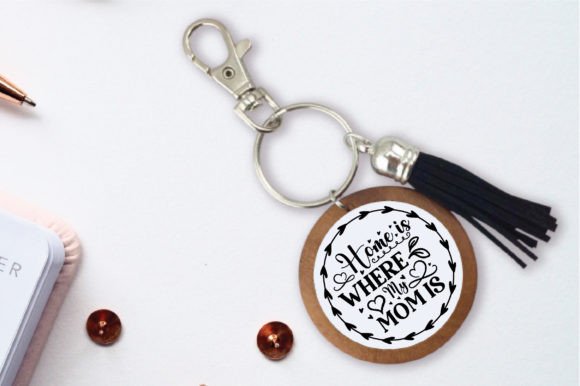
When evaluating a new machine embroidery design, my first question is never about how cute it looks on a screen; it is always about how it will survive the needle. The "Home is Where My Mom is Keychain" file presents an immediate emotional hook that resonates deeply with the handmade market. As a designer who frequently creates inventory for Mother’s Day, baby showers, and family reunions, I recognize this phrase as a perennial bestseller. However, translating a graphic originally intended for laser cutting into a successful embroidery project requires a critical eye.
Visually, the layout suggests a compact, badge-like aesthetic. This is excellent news for stitch stability. Unlike sprawling script fonts that can distort on stretchy fabrics, this design appears to have a contained boundary. For those of us in the Crafts category, this compact nature makes it versatile. It feels less like a massive chest logo and more like a token of affection, which aligns perfectly with current trends in personalized gifting. The mood is warm and nostalgic, but from a production standpoint, it reads as efficient. A design that stitches out quickly while retaining high perceived value is the holy grail for any Etsy seller or small business owner managing tight margins.
Real-World Application: Stitching for Emotional Impact
To truly test the viability of this digital embroidery file, I mentally placed it onto a specific client request I received last week: a custom canvas tote bag for a new grandmother. Tote bags are notoriously tricky because the fabric texture varies wildly, and the surface is rarely perfectly flat under the hoop.
In this scenario, the "Home is Where My Mom is Keychain" design serves as an ideal centerpiece. Because the original asset is optimized for laser cutting and CNC machines, the lines are likely clean and continuous. In embroidery terms, this translates beautifully to a combination of satin stitch borders and fill stitch interiors. When stitched onto unbleached canvas, the contrast between the smooth thread and the nubby fabric texture elevates the finished product from simple craft to boutique quality.
I also envision this working exceptionally well as an embroidered patch. Since the design is self-contained, you could stitch it onto water-soluble stabilizer or felt backing, then attach it to denim jackets, caps, or even quilt blocks. This flexibility is crucial for commercial embroidery businesses that need one design to serve multiple SKUs. Whether applied directly to a sweatshirt or created as a removable accessory, the sentiment remains the focal point without overwhelming the garment's silhouette.
Navigating Fabric Challenges and Technical Limits
While the versatility of this Graphics asset is appealing, experienced makers know that not all substrates play nicely with detailed text. If you plan to use this for baby embroidery on onesies or knit blankets, caution is required. Knits stretch; thread does not. If the stitch density is too high, the fabric will pucker around the letters, making the sentiment illegible and the garment uncomfortable.
For stretchy fabrics, I strongly advise using a cut-away stabilizer rather than tear-away. You may also need to slightly reduce the density in your digitizing software or add an underlay foundation to prevent the stitches from sinking into the pile. Conversely, if you are stitching on thin, sheer fabrics like lawn or voile for a nursery pillow, ensure the design isn't too heavy. A dense keychain shape can act like armor on delicate cloth, causing drape issues.
Dark fabrics present another hurdle. If the design relies on internal color changes to define the words "Mom" or "Home," those details might vanish on navy or black material. Always run a printable mockup or a grayscale test to verify contrast before committing to a full production run. Remember, what looks distinct in vector software might blend together once rendered in thread.
Commercial Viability and Brand Consistency
For creative entrepreneurs and shop owners, time is money. The "Home is Where My Mom is Keychain" design scores high on efficiency because of its size. Smaller designs mean fewer thread breaks, less stabilizer waste, and faster turnaround times. This allows you to price personalized gift items competitively while maintaining healthy profit margins.
However, brand consistency matters. If your shop specializes in minimalist, fine-line aesthetics, ensure this design matches your existing portfolio. The boldness typical of laser-cut styles can sometimes clash with delicate floral embroidery. Test it alongside your current bestsellers. Does it look cohesive in your product photography? Does it appeal to the same demographic? A disjointed catalog confuses buyers. Use this design to anchor a specific collection—perhaps a "Mama Bear" line or a "New Home" series—to maintain a curated feel.
Furthermore, consider the licensing. Since this is marketed as an instant download for cutting machines, you must verify the commercial embroidery rights before selling finished goods. Never assume that owning the SVG grants permission to sell embroidered merchandise. Protecting your business means respecting intellectual property and ensuring your design assets are cleared for your intended use case.
The Professional Maker’s Pre-Stitch Checklist
Before you load this embroidery file into your machine for a paid order, treat it with the same rigor as a complex jacket back. Professional results come from preparation, not luck. Follow these practical steps to ensure success:
- Verify Hoop Compatibility: Confirm the physical dimensions fit your smallest hoop comfortably with adequate margin for the presser foot. Do not rely solely on software estimates.
- Test on Scrap Material: Always stitch a sample on the exact fabric and stabilizer combination you intend to use for the final custom apparel or gift item.
- Inspect Lettering Clarity: Check that the smallest text elements are legible after stitching. If letters are closing up, increase spacing or simplify the font in your editing software.
- Evaluate Thread Contrast: View the test stitch in natural light and artificial light. Ensure the message pops against the background fabric.
- Check Wash Durability: If creating tea towels or baby items, wash and dry the test swatch. Laser-style designs can sometimes fray at the edges after laundering if not properly secured with edge stitches.
- Review Licensing Terms: Double-check the designer’s policy regarding commercial sale of finished embroidered products versus digital redistribution.
- Mockup Validation: Create realistic digital previews for your listings. Customers need to see how the design scales on different products before purchasing.
Final Thoughts on Design Adaptation
The "Home is Where My Mom is Keychain" represents a sweet spot in the maker economy: it is emotionally resonant, technically adaptable, and commercially viable. Its origins in laser cutting provide a structural advantage, offering clean lines that translate well to satin and fill stitches. However, the transition from digital graphic to tactile handmade product demands respect for the medium.
By approaching this design with a tester’s mindset rather than just a consumer’s enthusiasm, you elevate your work. You move beyond simply putting thread on fabric to creating heirloom-quality pieces that customers trust. Whether you are embellishing a holiday apron, branding a boutique tote, or crafting a heartfelt memorial piece, let technical precision support the sentiment. That balance is what defines a professional embroiderer and turns a simple keychain graphic into a cherished keepsake.